





Breast Implant Illness: Symptoms and When to Get a Revision

Although there are risks associated with any surgical procedure, ideally, the outcome of breast implant surgery is natural-looking, enhanced breasts for years to come. But what if you’re not satisfied with your new appearance, or are experiencing complications?
You may have heard of “breast implant illness,” a term used by patients to describe any one of multiple systemic symptoms that can happen post-implant. In this article, we’ll look at signs and symptoms of problems and what you can do to overcome these challenges, including when a revision may be needed.
Concerned your implants may be contributing to symptoms or changes in breast comfort, shape, or firmness? Book a consultation with Defyne to review your history, examine your implants, and discuss personalized treatment options.
What Is Breast Implant Illness?
Although breast implant illness (BII) is not an official medical diagnosis, the term is commonly used by breast implant patients to describe systemic, unexplained symptoms they associate with their implants.
Research has not clearly identified the link between breast implants and all symptoms reported, and there is no single standard treatment or diagnostic test to diagnose breast implant illness.
For many women, removing (explanting) the breast implants improves symptoms. Studies continue to evaluate how to develop a standardized approach to addressing BII symptoms.
Common Breast Implant Illness Symptoms Patients Report
While it can be difficult to definitively link symptoms to breast implants, there are some common symptoms reported by patients:
- Chronic fatigue
- Memory loss or trouble concentrating (“brain fog”)
- Hair loss
- Weight changes
- Anxiety or depression
- Joint pain and/or muscle pain
These symptoms have been reported by patients with all types of breast implants and can develop at any time after the breast implant surgery, sometimes years later.
Evidence suggests that there is a link between symptoms and autoimmune disease, with diagnoses such as Sjogren’s syndrome or rheumatoid arthritis being common.
Signs of Breast Implant Problems That Deserve Medical Evaluation
So, how do you know if you are having problems related to breast implants, and when to seek medical care? It’s important to talk to your physician if you have any health concerns, even if you’re not sure they’re linked to breast implants. But there are some clear breast-implant-related problems to watch for and report promptly to a healthcare provider:
- Pain
- Firmness
- Changes in the shape or size of the breast
- Lumpiness or rippling of breast tissue
- Signs of infection, like swelling, pain, redness, fever, or pus draining from recent incisions
- Bleeding (hematoma) around a new implant, which causes swelling, pain, and bruising
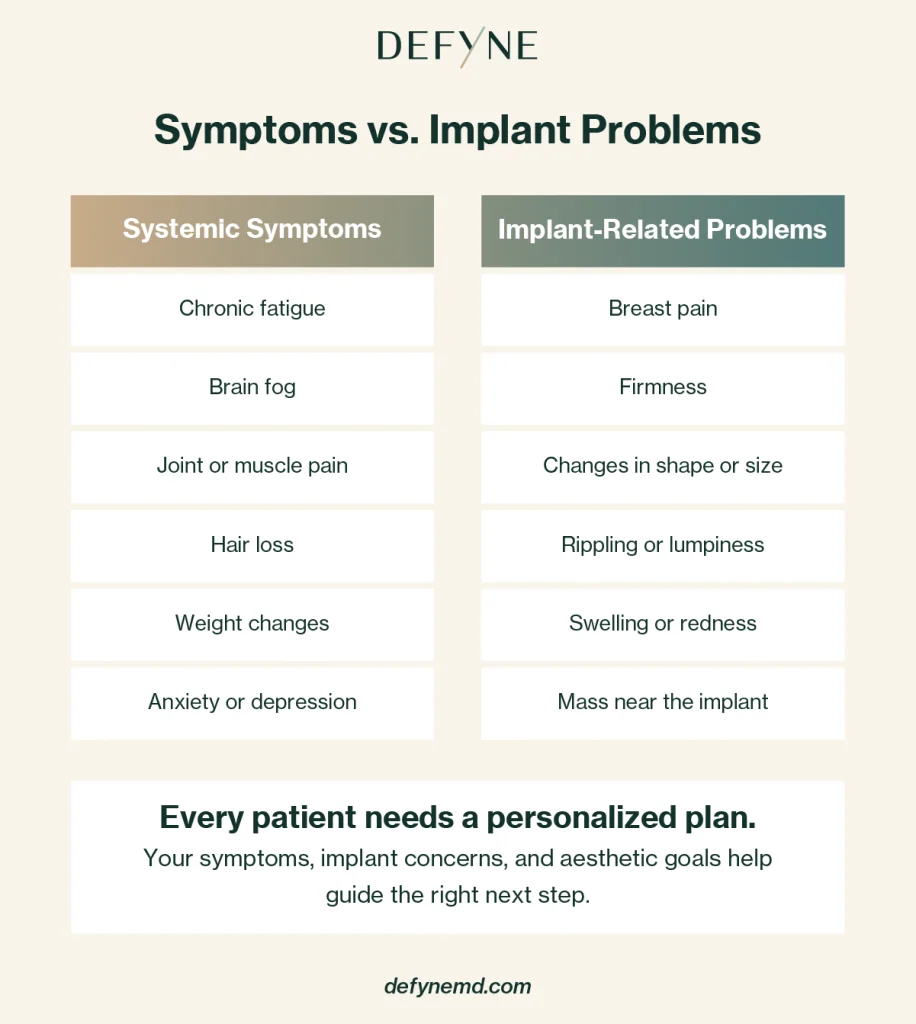
In a small percentage of patients, a type of cancer of the immune system (not breast cancer) called breast-implant-associated anaplastic large cell lymphoma (BIA-ALCL) can develop, sometimes years after the procedure. It is more common with textured implants, and symptoms to watch for include changes in the area around the implant, such as swelling, pain, and noticing a mass near the implant.
When It May Be Time to Consider Breast Implant Revision
After careful consultation with a board-certified plastic surgeon, breast implant revision may be considered for a number of reasons, including:
- Implant complications like capsular contracture, implant rupture, malposition or discomfort
- Changes to the breast appearance over time, such as asymmetry developing
- A change in the person’s goals, such as a desire to modify implant size or style
- The decision to remove implants entirely
An experienced provider can help evaluate symptoms, implant history and imaging, and make recommendations for evidence-based care that meets each person’s aesthetic goals. They can also help patients understand the risks and recovery involved in a revision procedure.
What Revision or Explant Surgery May Involve
Depending on the approach you decide on with your surgeon, revision can involve:
- Implant removal only (explant)
- Capsule release or removal
- Correction of implant pocket issues
- A breast lift, fat transfer, or other customized techniques
Breast implant revision surgery is typically performed under general anesthesia for your comfort and safety. Because every patient’s anatomy, concerns, and goals are different, the details of the procedure are customized to your needs.
After the existing implant or implants are removed, your surgeon will evaluate and address the implant pocket and surrounding capsule as appropriate. If revision is the goal, new implants may be placed, or fat may be transferred from another area of the body to help create the desired breast shape, feel, and appearance.
Will Symptoms Improve After Breast Implant Removal?
When there is a concern that breast implants may be causing symptoms of breast implant illness, having breast implants removed can sometimes lead to improvements. Because each patient has differences in their baseline health, overlapping medical conditions, and possible causes for the symptoms they are experiencing, not all patients find relief and some symptoms may still persist after breast implant removal. However, studies do show that explant has the potential to reduce symptoms in many patients, and some people report significant improvement.
The Defyne Approach: Personalized, Research-Driven Revision Care
At Defyne, we offer advanced, highly personalized breast implant revision planning based on symptoms, implant history, anatomy, and aesthetic goals. Techniques include implant exchange if appropriate, pocket correction, capsule management, lift strategies, or other tailored approaches if necessary.
As part of our specialized revision care, our surgeons’ expertise includes focused attention on managing capsular contracture. This post-implant complication occurs when scar tissue around a breast implant tightens, causing the breast to feel firm, look distorted, or become uncomfortable.
Because capsular contracture is a common reason patients consider revision surgery, our team is dedicated to advancing how it is treated. As the only practice in Arizona participating in the Study of GalaFLEX LITE Scaffold in Treatment of Capsular Contracture After Breast Implant Augmentation (STANCE), we are illustrating our commitment to research-based, successful care outcomes.
If you are experiencing breast implant illness symptoms, signs of breast implant problems, or concerns about capsular contracture, Defyne can help you understand your options. Book a consultation to discuss whether breast implant revision, explant, or another customized surgical plan may be right for you.
Contact Us
Request a Consultation
Are you ready to take the first step toward defining your destiny and achieving your best look yet? At Defyne, our board-certified plastic surgeons are skilled in performing both surgical and non-surgical procedures, achieving individualized, natural-looking results. Contact Defyne today to schedule your consultation appointment.