





What is an Internal Bra?
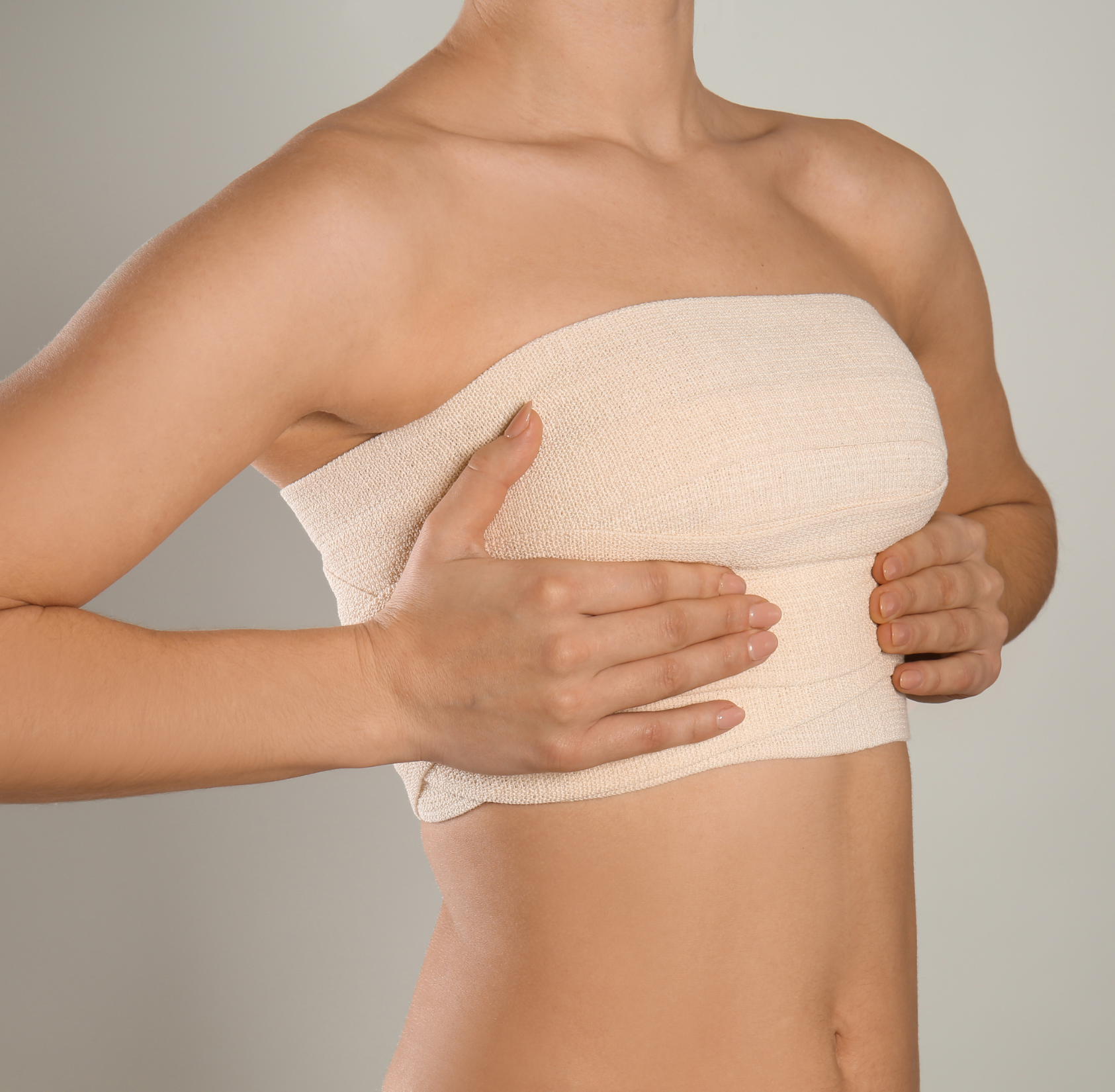
If you’ve been considering breast augmentation, you may have heard the term “internal bra” discussed. But what is an internal bra, and how does an internal bra work? This is a surgical approach to supporting the breast, improving shape, and extending longevity of breast augmentation or traditional breast lift results that can be approached in a few different ways.
In this article, we will explain internal bra techniques, their risks and benefits, and what to expect from the surgery.
As a leader in innovative plastic surgery, Defyne offers personalized consultations to determine the best plan of care for achieving your dream aesthetic results. Contact us today and take the first step on your journey.
Understanding Internal Bra Surgery
The term “internal bra” is often used to describe a variety of surgical techniques, which can create some confusion. Regardless of approach, an internal bra is a soft tissue scaffold that is used to enhance the results of aesthetic breast surgery, such as a breast lift, breast reduction, or breast augmentation.
There are five groups of techniques:
1. Mesh-Based Internal Bra Techniques
An internal mesh bra is a plastic surgery technique in which a surgeon places an absorbable or non‑absorbable mesh within the breast to serve as an internal scaffold, reinforcing weakened tissues and helping maintain breast shape over time. The mesh provides added structural support, functioning like an internal sling.
2. Acellular Dermal Matrix (ADM) Internal Bra Techniques
An acellular dermal matrix (ADM) internal bra uses biologic grafts—typically derived from human, porcine, or bovine tissue—to create an internal scaffold that integrates with the patient’s own tissue, providing additional support and improved shape.
3. Suture-Based Internal Bra Techniques
Rather than inserting mesh or ADM, a suture‑based internal bra reinforces the breast’s internal support by using strategically placed sutures to tighten, reshape, or reinforce an implant pocket or native breast tissue.
4. Dermal Flap Internal Bra Techniques (Autologous Internal Bra)
A dermal flap internal bra technique uses the patient’s own dermal tissue to create an internal support sling, providing natural internal support and improved long‑term stability.
5. Muscle-Based Internal Bra Techniques
A muscle‑based internal bra technique uses the patient’s own muscular support structures to reinforce and stabilize the breast from within.

Benefits of the Internal Bra Approach
When a board-certified plastic surgeon includes an internal bra surgical technique in a breast augmentation or traditional breast lift procedure, it provides longer-lasting results and extra support compared to breast enhancement alone. The implanted materials gradually merge with the body’s natural tissues, stabilizing breast tissue.
Results of an internal bra before and after:
- Before: long-term effects of the natural aging process and gravity mean changes in shape and position after breast enhancement, causing the breasts to gradually sit lower.
- After: an internal framework that adds support without a pushup bra, maintaining youthful breasts and a lifted breast contour over time.
With multiple techniques available, internal bra breast lifts can be customized to each individual’s anatomy and aesthetic goals.
As part of a surgical procedure, internal bras carry risks such as infection, inflammation, poor healing, and the need for revision. A board-certified plastic surgeon can review these risks with you and help determine the best approach.
Who Is a Good Candidate for Internal Bra Surgery?
Many women experience changes in breast shape and firmness due to pregnancy, significant weight loss, or the natural aging process. An internal bra technique can help restore a lifted, youthful contour in these cases.
You may be a good candidate for internal bra surgery if you have:
- Weakened or thin breast tissue that cannot support breast implants without added reinforcement
- Excess skin or breast sagging (ptosis) due to aging, pregnancy, or weight loss
- Poor skin elasticity that limits the longevity of a traditional breast lift alone
- Complications from a prior procedure, such as double bubble deformity or breast implants that have settled improperly
- Larger or heavier implants that may need additional support to maintain their position over time
- A desire for longer-lasting breast lift or breast augmentation results
To be considered for the internal bra procedure, you should have overall good health and realistic expectations. A plastic surgeon will assess your breast anatomy and medical history to determine if this approach is suitable for your needs.
What to Expect During Internal Bra Surgery
The internal bra procedure is performed as part of a breast lift, breast augmentation, or breast reduction surgery—it does not require a separate operation. The surgery is typically performed under sedation by a board-certified plastic surgeon.
During the procedure, the surgeon makes incisions consistent with the primary breast surgery being performed. The internal bra material—whether mesh, acellular dermal matrix, sutures, or a dermal flap—is then secured to the chest wall and surrounding breast tissue to provide support and reinforce the breast’s internal structure. The material acts like a push-up bra from within, helping to maintain breast shape and provide support where the body’s natural tissue has weakened.
Many women find that this additional step adds minimal time to their overall breast surgery while significantly improving the longevity and stability of their results.
Recovery After Internal Bra Placement
It’s important to know that internal bra breast lifts are part of breast enhancement surgery; they do not require a separate procedure and recovery. Typically, depending on the surgery, there is some discomfort for the first 1-2 weeks, after which light activities can be resumed.
Heavy lifting and workouts are not recommended for the first 4-6 weeks. During the healing process, a supportive bra is important and may be recommended 24/7 during the initial recovery period.
Patients can generally expect to return home the same day after a brief recovery period. Some swelling and discomfort are normal in the first few weeks. Most patients can return to desk work after about one week, though individual timelines vary.
During recovery, you should not wear a regular bra—a supportive surgical bra is important to protect the results of your internal bra breast lift. If you notice symptoms such as a high fever or intense breast pain, seek medical attention promptly, as infection is a possibility following any breast surgery.
Once fully healed, patients often find that the internal bra provides a noticeably improved breast contour and overall appearance compared to a traditional breast lift alone.
Breast tissue and any supportive structure (mesh, ADM, sutures, or dermal flap) continue to settle over the next 3–6+ months. Final results appear over several months as the internal bra fully integrates with breast tissue.
Why Choose Defyne for Internal Bra Surgery?
When choosing a provider for breast enhancement, Defyne stands out with a commitment to evidence-based cosmetic surgery techniques, patient education, and personalized treatment planning. Our surgeons are experienced at integrating advanced treatment approaches, with a focus on safety, innovation, and long-term results.
Interested in learning how the internal bra procedure could help you get your desired breast contour and enhance your breast lift surgery, augmentation, or breast reduction surgery? Contact Defyne today to schedule your personalized consultation.
Contact Us
Request a Consultation
Are you ready to take the first step toward defining your destiny and achieving your best look yet? At Defyne, our board-certified plastic surgeons are skilled in performing both surgical and non-surgical procedures, achieving individualized, natural-looking results. Contact Defyne today to schedule your consultation appointment.