





The Pros and Cons of Breast Reduction Surgery

Breast size can have both a positive and a negative impact on well-being. If you have very large breasts, you may be familiar with common related challenges: neck, back, or shoulder pain, skin irritation, difficulty exercising, and trouble finding clothes that fit well.
If you’re feeling limited by breast size, you may be wondering if breast reduction surgery is right for you. To help you make a confident, informed decision, it can be helpful to understand the pros and cons of breast reduction surgery.
At Defyne Plastic Surgery, our board-certified surgeons are experts in breast reduction techniques.
You can start your journey today with a consultation to create a personalized plan to achieve the results you’ve been dreaming of.
What is Breast Reduction Surgery?
Understanding breast reduction surgery pros and cons starts with knowing what the procedure is designed to accomplish.
Breast reduction surgery, also called reduction mammoplasty, removes excess breast tissue, fat, and skin. It is a commonly performed plastic surgery procedure and is linked with high patient satisfaction. The goal is to create a breast size and shape that better fits the patient’s body and lifestyle.
In addition to reducing breast volume and reshaping the breast, this procedure may reposition the nipple-areola complex when appropriate. There are several techniques for breast reduction. Choosing the best one depends on breast size, tissue composition, nipple position, and individual goals.
The procedure can be performed for both cosmetic and reconstructive (medically necessary) reasons, which affects insurance coverage eligibility.
When breast reduction is deemed medically necessary — for example, to relieve chronic pain or skin conditions — it may be covered by health insurance. When performed purely for cosmetic reasons, breast reduction is generally not covered by insurance and is an out-of-pocket expense.
The Pros and Cons of a Breast Reduction: Physical Benefits
When weighing the benefits of a breast reduction, physical relief is often one of the biggest advantages. This may include:
- Improvement in neck, shoulder, and upper back discomfort
- Reduced shoulder grooving from bra straps
- Less skin irritation or rashes beneath the breasts
- Greater comfort during exercise and daily movement
- Improvement in posture
Research shows that as many as 82% of patients report symptom relief from breast reduction even as long as 15 years after the procedure.
Breast Reduction Surgery Pros and Cons: Emotional and Lifestyle Benefits
The pros and cons of breast reduction surgery are not only physical; for many patients, lifestyle and comfort matter just as much. While emotional and lifestyle benefits vary from person to person, they may include the following outcomes:
- Improved ease in finding clothing that fits well
- Feeling more comfortable and confident in clothing
- Exercise and active hobbies may feel more accessible
- Improved self-image and reduced self-consciousness
- A more proportional breast size may support a patient’s overall body goals
- Reduced anxiety and depression
- Enhanced sexual function
Common Problems After Breast Reduction Surgery
Like any surgical procedure, breast reduction does come with some risks to consider. Fortunately, the rate of serious complications is low. Common problems after breast reduction surgery, which should be reviewed carefully during consultation, include:
- Wound healing problems, bleeding, infection, or fluid collections
- Scarring, though scars typically fade over time, and the surgeon’s technique can affect results
- Temporary or permanent changes in nipple or breast sensation
- Asymmetry, contour irregularities, or dissatisfaction with size or shape
- Breastfeeding may be affected depending on the technique and individual anatomy
- The potential need for revision surgery
Individual risk level will depend on health history, smoking status, breast size, the expertise of your surgeon, and the surgical approach.
Recovery After Breast Reduction: What Patients Can Usually Expect
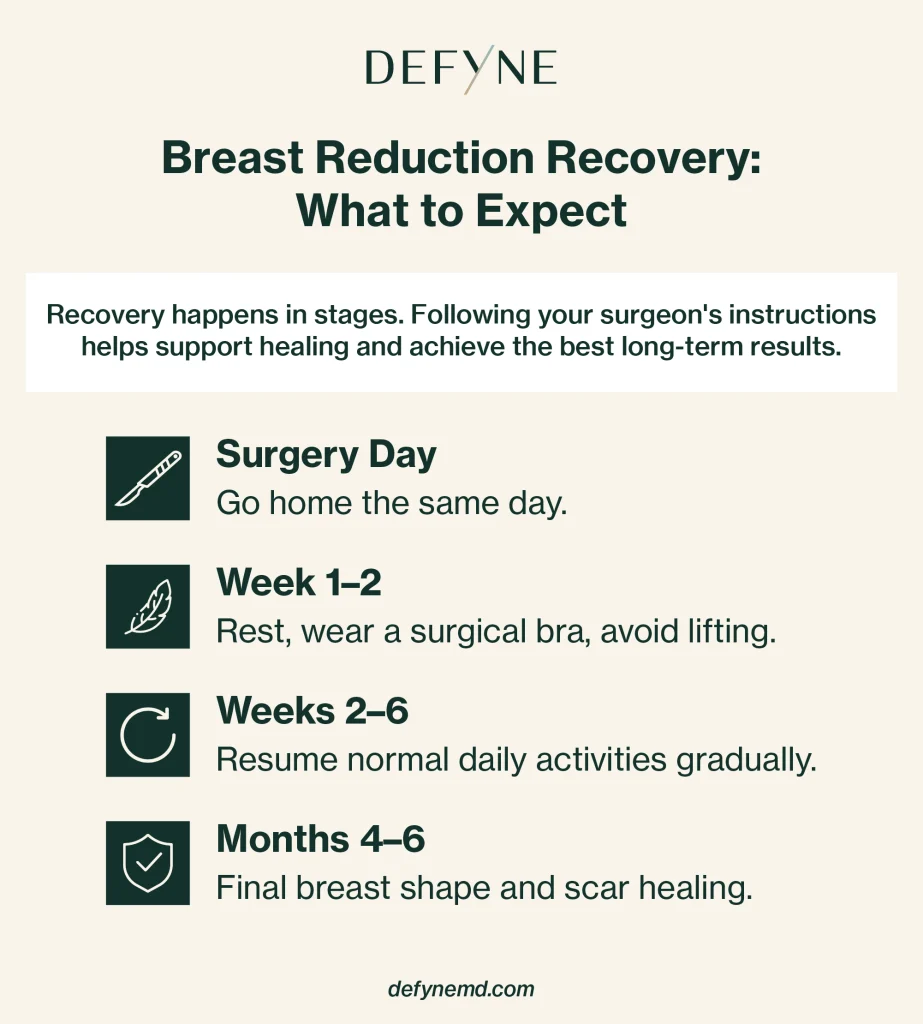
Setting realistic expectations about breast reduction recovery and results can also help you weigh the pros and cons. Benefits of breast reduction develop gradually as healing takes place and swelling improves, with final shape and scar maturation settling in 4-6 months.
Following surgery, you can typically expect to go home the same day. A surgical bra or supportive garment may be recommended for comfort and healing. Swelling, bruising, soreness, and tightness are common early in the healing process.
Initial downtime is 1-2 weeks, and patients are usually advised to avoid strenuous activity, heavy lifting, or intense exercise until cleared by their physician. Follow-up appointments are important to monitor healing.
Who May Be a Good Candidate for Breast Reduction?
If you have physical discomfort related to breast size, experience skin irritation, activity limitations, or posture concerns, a breast reduction may be appropriate for you. The first step to learn more is a consultation with a board-certified plastic surgeon. They will review your health history to make sure you are in overall good health. In addition, you should:
- Be a non-smoker or willing to stop nicotine use, as this can affect wound healing.
- Have realistic expectations about scars, results, healing, and possible changes in sensation.
- Discuss pregnancy, breastfeeding plans, and any anticipated weight fluctuations.
Your surgeon will consider factors like breast size, breast sagging, skin elasticity, and more to determine the best surgical approach. You can ask about recommended incision patterns for your situation and individual risks during this appointment.
How Defyne’s Approach Differs from Traditional Breast Reduction
Rather than treating breast reduction as a one-size-fits-all procedure, Defyne emphasizes a customized surgical plan designed around your body, goals, and desired outcome.
By personalizing breast reduction techniques, we can tailor our advanced surgical approach to carefully target breast shape, degree of reduction, lift, and nipple position. The incision pattern and tissue shaping will depend on your anatomy and goals. Incision patterns include:
- Lollipop incision—also called a “short scar breast reduction,” this involves an incision around the areola, along with a second incision vertically down to the breast crease.
- Wise pattern incision—also called an “inverted T” incision —is often used when significant breast tissue is removed and involves creating three separate incisions: one around the areola, one down to the breast crease, and one horizontally across the breast crease.
- Liposuction-assisted method—depending on anatomy, some people may benefit from a liposuction-assisted breast reduction technique, which can either be completed using liposuction only or alongside an incision pattern.
When considering the pros and cons of getting a breast reduction, it’s important to know that the procedure can offer meaningful physical, emotional, and lifestyle benefits. It also involves risks, scarring, recovery time, and important surgical decisions. The best way to understand personal candidacy is through consultation.
Ready to explore whether breast reduction is right for you?
Book a consultation with Defyne to discuss your concerns, goals, and personalized surgical options.
Contact Us
Request a Consultation
Are you ready to take the first step toward defining your destiny and achieving your best look yet? At Defyne, our board-certified plastic surgeons are skilled in performing both surgical and non-surgical procedures, achieving individualized, natural-looking results. Contact Defyne today to schedule your consultation appointment.