





Labiaplasty Recovery: Side Effects and Timeline

Labiaplasty recovery typically takes around six weeks, but the timeline can change based on individual factors. By learning about what to expect during the labiaplasty recovery process, what is normal during healing, and what results to expect after full recovery, you can feel more confident about your decision to have this procedure.
Ready to learn more about what your recovery could look like from a board-certified surgeon?
Book a private consultation with Defyne to discuss your goals and a personalized labiaplasty recovery plan.
What is Labiaplasty?
Labiaplasty is a surgical procedure that addresses excess tissue around the vulva. Commonly, it reduces the size of the labia minora, which are the folds of tissue around the vaginal opening.
This extra skin can often lead to chafing or discomfort during routine physical activities, when wearing certain clothing, or during sex. It can also cause decreased confidence during intimate experiences and affect the symmetry or appearance of this area.
Some women seek this procedure after pregnancy or childbirth alters the appearance of the labia minora, while others have never had children but notice concerns following puberty. Aging or injury can also create changes.
Although the thought of surgical correction can feel intimidating, 94% of women express satisfaction with the procedure.
What Patients Can Expect During the Labiaplasty Recovery Process
Labiaplasty is commonly performed as an outpatient procedure, with most patients returning home the same day.
Labiaplasty recovery post-op depends on several factors:
- Surgical technique
- Overall health
- Smoking status
- How well the patient adheres to post-op instructions
While the recovery time for labiaplasty varies somewhat from person to person based on these factors, there is a general timeline most patients follow, and common side effects to expect.
Common Side Effects: Swelling, Discomfort, Bruising, and Sensitivity
In the first week after the procedure, some swelling and mild to moderate discomfort are common. This initial 5-7 day period is the expected downtime after a labiaplasty. Any pain can be controlled with pain medication, and your surgeon will give you instructions on how to care for the site to reduce the risk of complications such as infection.
Other side effects of labiaplasty include:
- Bruising
- Itching
- Numbness or increased sensitivity (temporary)
If heavy bleeding, fever, worsening pain, spreading redness, drainage, or wound separation occur, it’s important to contact your physician. Fortunately, complications are rare.
Labiaplasty Recovery Timeline: Week by Week
The labiaplasty recovery timeline is gradual, and every patient heals at a slightly different pace. In general, most patients can expect the following week-by-week recovery pattern.
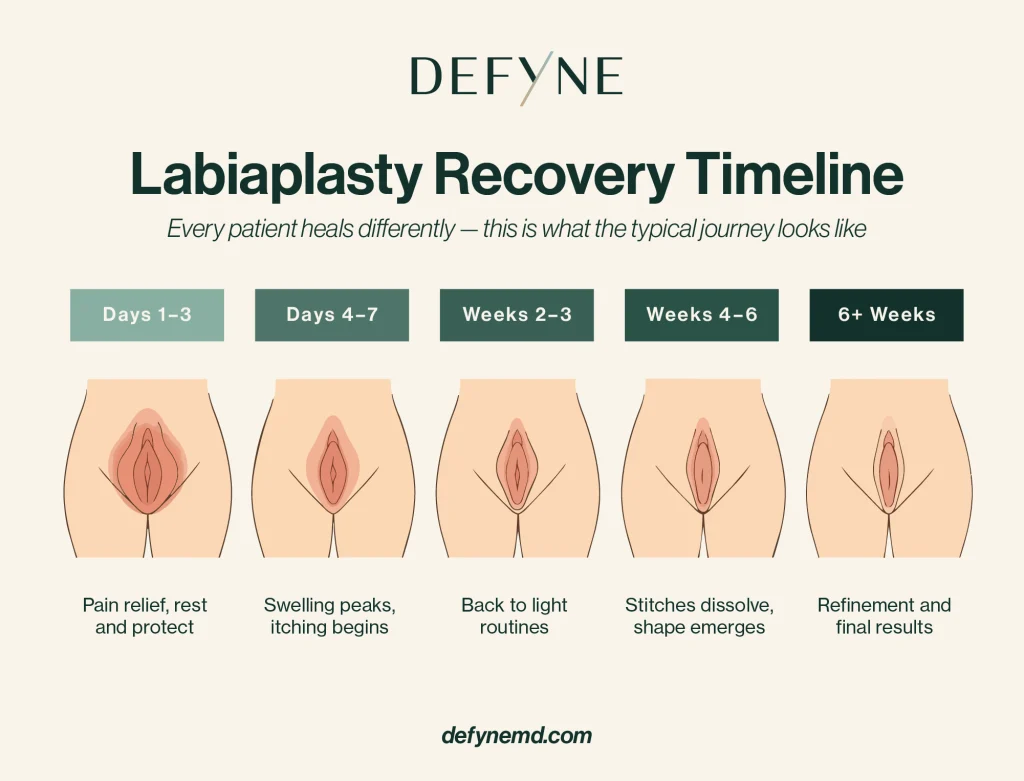
Days 1–3: Rest and Swelling Management
The first few days are usually focused on rest, comfort, and protecting the surgical area. Use cold compresses only as directed, avoid applying ice directly to the skin, and keep activity to a minimum. Gentle hygiene is also important: clean the area as directed in your post-op instructions, pat it dry rather than rub it, and wear loose, breathable clothing.
Days 4–7: Swelling May Peak Before Improving
During the second half of the first week, swelling may reach its peak before it begins to improve. Some patients also experience light spotting, itching, or sensitivity as the tissue begins to heal. Pads may be helpful for light drainage or spotting.
Short, gentle walks may begin if your surgeon allows them, but exercise, heavy lifting, prolonged standing, and anything that increases pressure or friction should still be avoided.
Weeks 2–3: Returning to Light Routines
By the second week, many patients feel comfortable returning to desk work, school, or other light daily routines. Swelling and bruising continue to improve. Even if you feel better, avoid strenuous exercise, cycling, running, tight clothing, tampons, and sexual activity until your surgeon clears you.
Weeks 4–6: Gradual Improvement and Follow-up
Between weeks four and six, swelling usually continues to decrease, and dissolvable stitches may be gone or nearly gone. The final shape may be more visible, but the tissue is still settling. Depending on your healing progress, your surgeon may clear you to resume exercise and intimacy around six weeks, slowly.
Beyond 6 Weeks: Refinement and Final Results
After six weeks, many patients are back to most normal activities, but refinement continues. Residual swelling can take additional time to resolve, scars continue to soften and mature, and the final contour may continue to improve over the following months. Once healing is complete, the results of labiaplasty are considered long-lasting.
Comparing the before-and-after of labiaplasty recovery is one of the clearest ways to set realistic expectations. Most patients notice a meaningful difference in both comfort and appearance once residual swelling resolves — you can view real before-and-after labiaplasty results to see what’s achievable.
Defyne’s Patient-Centered Approach to Labiaplasty Recovery
Defyne’s board-certified plastic surgeons specialize in cutting-edge surgical approaches, and work with patients to create an individualized approach that helps achieve natural-looking results they can be proud of.
For labiaplasty, two primary surgical approaches are commonly used:
- The trim technique—a straightforward method for reducing the size of the labia minora. With this approach, the surgeon removes excess tissue along the outer edge of the inner labial folds.
- The wedge technique—this removes a small, wedge-shaped section of tissue from one or both sides of the labia minora while preserving the natural edge of the tissue.
Because no two patients are alike, your surgeon selects and tailors the technique to your anatomy, goals, and how your tissue is likely to heal.
Matching the right approach — and removing only what’s needed — can mean less tension on the incision, more manageable swelling, and a smoother, more comfortable recovery. The wedge technique, for instance, preserves the natural edge of the labia, which can help minimize visible scarring, while the trim technique offers a straightforward path to a uniform contour.
Throughout your recovery, you’ll be supported by detailed aftercare instructions, accessible follow-up, and compassionate communication for a smooth post-op experience.
If you’re considering labiaplasty, schedule a consultation with Defyne to learn what your personalized recovery timeline may look like.
Contact Us
Request a Consultation
Are you ready to take the first step toward defining your destiny and achieving your best look yet? At Defyne, our board-certified plastic surgeons are skilled in performing both surgical and non-surgical procedures, achieving individualized, natural-looking results. Contact Defyne today to schedule your consultation appointment.