





How to Get Rid of Man Boobs: Understanding Gynecomastia Treatment

If you have been struggling with getting rid of chest fat, you’re not alone. Gynecomastia, the condition that causes “man boobs” usually due to hormonal imbalances, can affect as many as 30% of men during their lifetime.
Fortunately, you have several options for treating gynecomastia, including lifestyle modifications, medication, and surgery. Understanding your options, including Defyne’s innovative approach to getting rid of man boobs, can help you make the best decision and ultimately feel and look your best.
To explore your options, please use our contact form to schedule a consultation.
What Causes Gynecomastia?
Gynecomastia is most often caused by hormonal imbalances, which can happen due to puberty, aging, certain medications, and medical conditions that can disrupt hormone balance, like thyroid disorders or liver disease.
Symptoms include breast growth, swelling, tenderness, firm tissue under the nipple, and puffy nipples. It can affect one breast or both breasts.

Pseudogynecomastia is a similar condition, where fatty tissue in the chest area due to weight gain causes larger breasts, but it is not related to hormonal changes and is not true gynecomastia.
How to Reduce Man Boobs
Gynecomastia treatment recommendations to reduce excess breast tissue will depend on whether the condition is mild and how early it was diagnosed.
There are a few standard options:
Lifestyle Changes
In mild cases, exercise and losing weight can help reduce some chest fat and help shape the chest muscles, minimizing the appearance of enlarged male breasts. Weight gain can cause testosterone imbalance, so taking steps to maintain a healthy weight and diet can help support healthier testosterone levels. Proper nutrition also supports healthy hormone levels. Excess alcohol consumption can contribute to gynecomastia and should be avoided.
Medications
Hormone therapy in the first year of gynecomastia onset can help reverse the effects of estrogen (the hormone that causes enlarged male breasts) by blocking it. Prescription medications used include tamoxifen and raloxifene, which are selective estrogen receptor modulators (SERMs).
Treating Underlying Conditions
In cases of hormone imbalances caused by medications or underlying health conditions, addressing these causes can help manage gynecomastia.
Although some men find treatment with lifestyle changes alone, oftentimes Gynecomastia needs to be addressed surgically to fully resolve.
Gynecomastia Surgery
For those exploring how to get rid of excess breast tissue due to gynecomastia when other treatment options have failed or are not viable, traditional plastic surgery offers solutions for male breast reduction:
- Liposuction: a procedure to remove excess fat through small incisions
- Excision: a procedure to remove excess breast tissue and sometimes skin
- Combination of both: liposuction and excision together may be appropriate in some cases.
Male breast reduction surgery can lead to long-lasting results and a flatter, more muscular-appearing chest. However, because it is an invasive surgical procedure, it does come with a risk of scarring and requires healing time.
The Defyne Approach to Reducing Chest Fat—What Makes It Different?
At Defyne, we’re not just following the traditional path of aesthetic care. We’re shaping the future of plastic surgery with innovative techniques. Not only is it important for you to have great self-esteem and look fantastic, but getting the results you need should be personalized, natural-looking, and as non-invasive as possible.

The S.M.A.R.T. Core Contour Technique
Our Safe Minimally-Invasive Advanced Rejuvenation Technique (S.M.A.R.T.) Core Contour procedure offers an alternative to traditional gynecomastia surgery through the combination of cutting-edge technologies, including:
- Rotational liposuction: This approach offers easier and more effective fat removal than traditional liposuction. By using infrasonic vibrations to liquefy fat deposits in the body, rotational liposuction yields smaller incisions, a reduced risk of scarring, and a quicker recovery time. It also only requires local anesthesia, rather than riskier general anesthesia.
- RF thermal energy: This non-surgical aesthetic technology provides a minimally invasive option for body contouring, utilizing radiofrequency energy to stimulate collagen production and tighten the skin for a smoother appearance. Combined with liposuction, it effectively removes excess fat through minimal incisions by heating and melting fat cells prior to their removal.
If excess glandular tissue needs to be removed, it is done through the natural nipple line, resulting in virtually scar-free incisions.
Benefits of Defyne’s Gynecomastia Treatment vs. Traditional Surgery
This outpatient procedure is less invasive than traditional plastic surgery and is performed under local anesthesia, ensuring your comfort while avoiding the risks associated with general anesthesia.
Most patients resume normal activities quickly—many people return to their normal routines the next day.
The improvements from this surgery are generally long-lasting, but maintaining a stable, healthy weight helps ensure that the results are sustained over time.
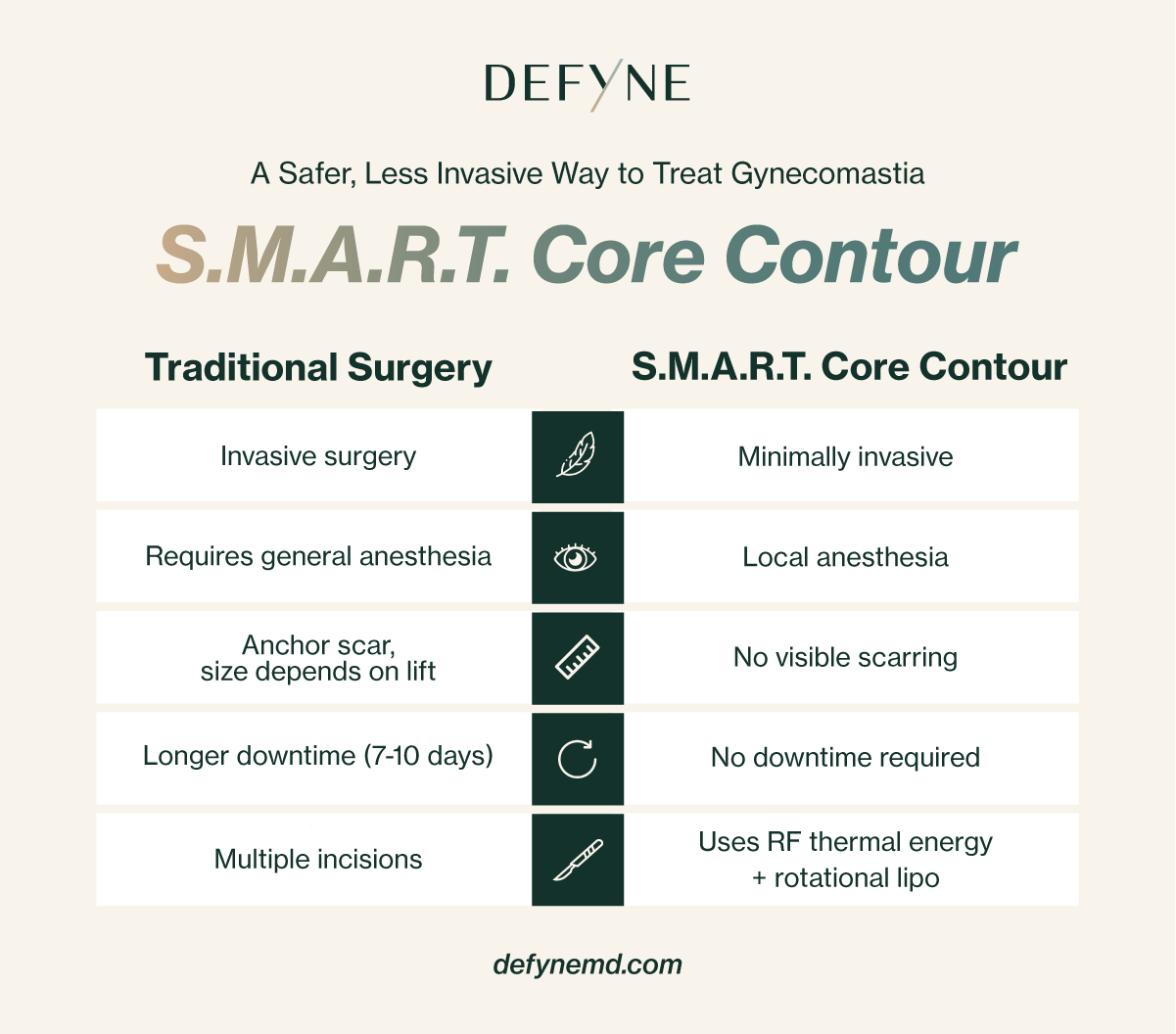
Not all patients are good candidates for this approach to male breast reduction. If you have excess skin or extra fat on your chest, you might need a more traditional type of plastic surgery. Consulting with one of our board-certified surgeons can help you determine which treatment is best for you.
Want to Get Rid of Your Unwanted Chest Fat with Defyne?
Whether with our S.M.A.R.T. Core Contour procedure or traditional surgery, Defyne’s gynecomastia treatment options can help you achieve a firmer, flatter chest for a physique you’ll be proud to show off.
Contact Us
Request a Consultation
Are you ready to take the first step toward defining your destiny and achieving your best look yet? At Defyne, our board-certified plastic surgeons are skilled in performing both surgical and non-surgical procedures, achieving individualized, natural-looking results. Contact Defyne today to schedule your consultation appointment.