





Does Cellulite Go Away with Weight Loss?

While it’s possible to reduce the appearance of cellulite with weight loss, the underlying cause of cellulite is not guaranteed to go away after losing weight. Other factors, such as skin laxity, genetics, and skin structure, may also prevent weight loss alone from reducing cellulite.
Fortunately, there are effective methods for treating cellulite, and Defyne’s cutting-edge technology and approach can help you achieve a smoother, more confident appearance with enhanced results compared to traditional methods.
If you would like to explore options for long-lasting cellulite treatment, schedule a consultation with one of our board-certified surgeons.
Understanding Cellulite
Cellulite is an interaction between the fatty tissue and the connective tissues beneath your skin. Between 80-90% of women have cellulite, typically around their thighs, buttocks, and/or stomach. Even though it involves fat and can be more pronounced on people who carry excess weight, it can be visible on women who are not overweight as well.
What Causes Cellulite?
The fibrous bands of connective tissue under your skin are what cause the lumpy, oatmeal-like texture of the skin in cellulite. Fatty tissue pushes against these bands, and the connective tissue pulls the skin downward, or “bunches” the skin up in places, preventing it from being smooth. Doctors grade the amount of cellulite from grade 0 (none) to grade 3 (severe dimples).

Several factors contribute to the development and severity of cellulite:
- Genetics— Some people are genetically predisposed to develop cellulite, regardless of their weight or fitness level.
- Hormones— Cortisol, estrogen, and other hormones play a role in fat distribution and skin structure.
- Age— As we age, skin loses elasticity and becomes thinner, making cellulite more noticeable.
- Lifestyle— Diet, physical activity, and hydration can influence the appearance of cellulite.
- Gender— Cellulite is much more common in women due to differences in fat distribution and connective tissue structure.
The good news about cellulite is that it’s not painful, and it isn’t a sign of a health problem. However, it can affect self-esteem.
Does Losing Weight Get Rid of Cellulite?
Since cellulite involves fat, a common perception is that losing weight should also get rid of cellulite. The real answer is that weight loss—along with regular exercise and increased muscle mass—may reduce the appearance of cellulite for some, but not all, individuals.
There are several reasons why:
- Reduction in Fat: Losing weight can decrease the amount of fat pushing against the connective tissue, making visible cellulite less pronounced for some people.
- Skin Laxity: Rapid or significant weight loss can lead to loose skin, which may actually exacerbate the appearance of cellulite. Skin elasticity may not “snap back,” after someone has lost significant weight, leaving dimples and uneven texture.
- Persistent Fibrous Bands: The structure of the connective tissue bands remains unchanged with weight loss. If these bands are tight or thick, cellulite may persist even after fat reduction due to continued skin tightening (this is also why liposuction is ineffective for cellulite).
- Genetic and Structural Factors: Some people have cellulite regardless of their weight due to genetics and skin structure.
Traditional Cellulite Treatments: Pros and Cons
When weight loss doesn’t work, various treatments are available that can potentially reduce or eliminate stubborn cellulite, but their effectiveness varies. Understanding the pros and cons of the following traditional cellulite reduction treatments is important before making any treatment decisions.
- Topical Creams: These include creams that contain ingredients like retinol or caffeine. They may temporarily tighten skin to some degree, but they don’t address the underlying causes of cellulite.
- Massage and Mechanical Treatments: Techniques like endermologie, an FDA-approved massage treatment that utilizes rolling and suction to enhance circulation and skin texture, can help reduce the appearance of cellulite; however, results are often short-lived.
- Energy-Based Therapy: Treatments such as radiofrequency ablation, laser treatment, and acoustic wave therapy can stimulate collagen production and/or break up fibrous bands, resulting in moderate improvement. They may require multiple sessions, and maintenance treatments are typically necessary.
The Defyne Approach to Cellulite Treatment: How It’s Different
Defyne is proud to offer an innovative two-step process to treat cellulite that targets the root causes of the problem. This cellulite treatment offers enhanced cellulite reduction compared to traditional approaches, creates natural-looking results, is minimally invasive, and requires no downtime.
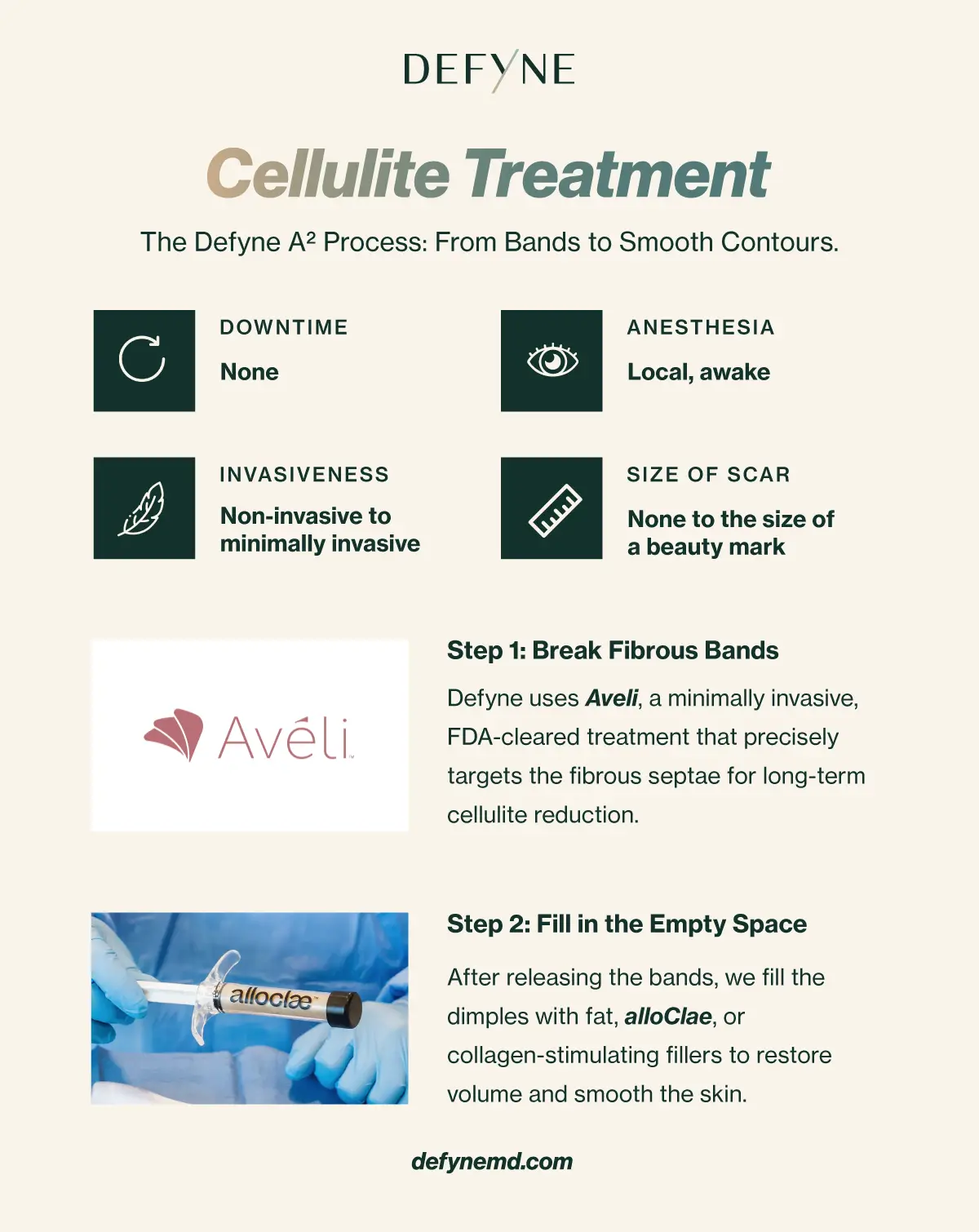
Let’s take a closer look at both parts of Defyne’s cellulite treatment approach and what makes it effective:
Breaking Up Fibrous Bands
Releasing the connective bands, called septae, that contribute to the dimpled appearance of cellulite can lead to long-lasting results and create firmer skin.
Defyne uses a minimally invasive procedure called Aveli to disconnect these bands and reduce skin tightening, resulting in a smoother appearance of your skin.
Filling Contours
While reducing tight fibrous bands is one corrective step for reducing cellulite, filling in the indentations where the bands were helps ensure the bands do not re-form. There are a few ways this can be achieved:
- Harvested fat: Fat grafting, also known as fat transfer, is a procedure in which your own fat cells are collected from a donor site, harvested, purified, and then the fat is transferred to the targeted area.
- alloClae: alloClae is an advanced, ready-to-use filler designed to enhance body contours and address issues such as cellulite. It is formulated with intact fat cells and naturally occurring extracellular matrix proteins, allowing it to integrate seamlessly with your body’s natural tissues for results that look and feel natural. This treatment is versatile for various body areas and delivers immediate contour improvement by restoring volume. When combined with Aveli, the approach is referred to as A².
- Dermal fillers: Synthetic dermal fillers like Sculptra, Bellafill, and Radiesse are also used to fill in areas of volume loss. Unlike hyaluronic-acid-based fillers, these options stimulate collagen production over time, encouraging the body to naturally rebuild volume.
Ready to Say Goodbye to Cellulite?
To find the cellulite treatment that best matches your needs and goals, your first step is to schedule a consultation with one of Defyne’s experienced patient care coordinators.
This visit provides an opportunity for you to share your concerns about cellulite and ask any questions you may have about the available treatment options. Your provider will review your medical history and discuss your aesthetic preferences to recommend the most suitable cellulite treatment plan tailored to your needs.
Ready to address cellulite? Take the first step toward smoother skin.
Contact Us
Request a Consultation
Are you ready to take the first step toward defining your destiny and achieving your best look yet? At Defyne, our board-certified plastic surgeons are skilled in performing both surgical and non-surgical procedures, achieving individualized, natural-looking results. Contact Defyne today to schedule your consultation appointment.