




How Long Does alloClae Last?

How long does alloClae last? A reliable duration has not yet been established by long-term human studies. The manufacturer describes lasting contour support, but individual results, the need for touch-ups, and whether a result can fairly be called permanent remain uncertain.
Interested in a personalized consultation to discover how alloClae offers non-surgical body contouring to support your aesthetic goals? Contact Defyne today to begin your journey.
What is alloClae?
First, the basics: alloClae is a processed human adipose tissue allograft containing nonviable fat cells, extracellular matrix, lipids, and connective tissue. It is used to improve body contours, address cellulite, and treat hip dips. Unlike traditional fat transfer, alloClae provides volume and support without requiring fat harvesting and does not use your own cells.
alloClae may be used alone or with other procedures for selected contour concerns. The clinician should explain the proposed use, anesthesia, recovery, and alternatives; combining treatments can change both risks and downtime.
What the Evidence Says About alloClae
Published alloClae research includes laboratory work and a six-month mouse study showing tissue integration. These findings are promising but do not establish how long contour results last in people or a standard three-to-six-month human stabilization timeline. Long-term, product-specific human follow-up is needed.
Factors That May Affect Longevity
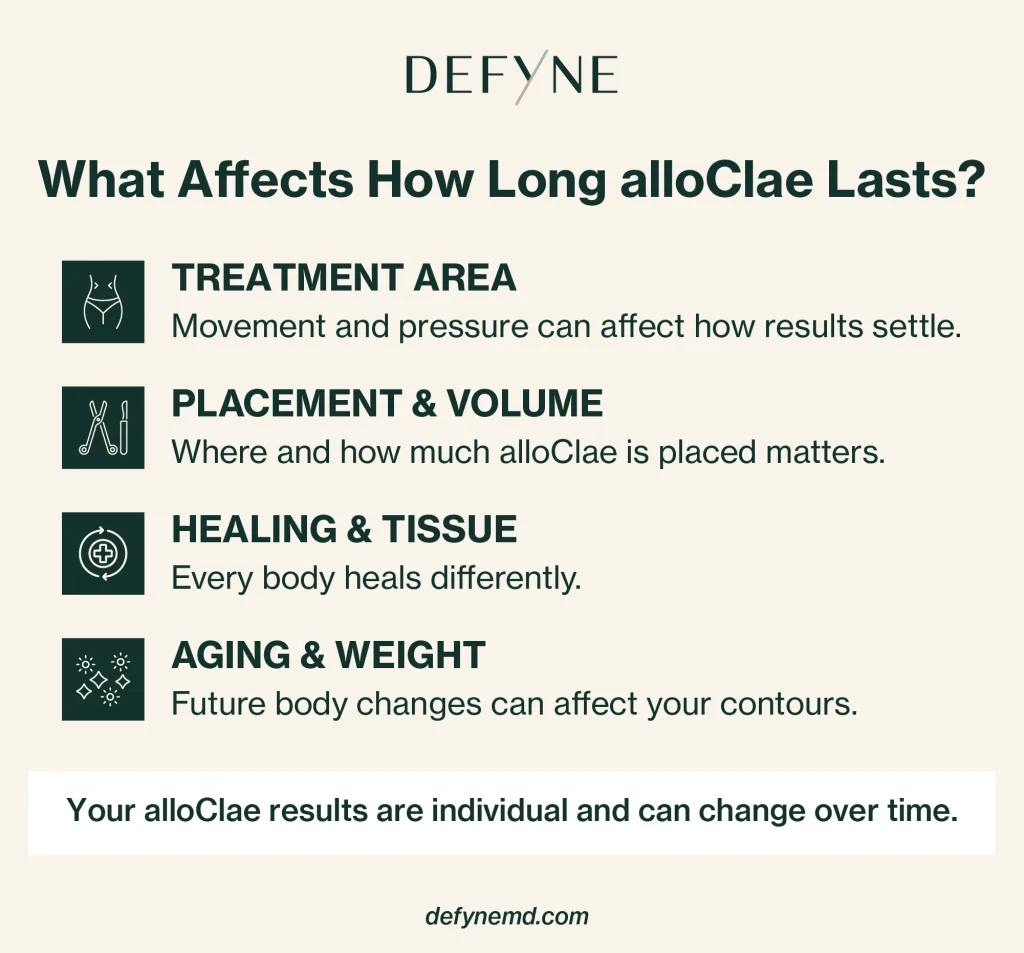
We do know that, in general, fillers behave differently depending on individual factors, and it’s reasonable to expect alloClae to be affected by these factors:
- Treatment area: movement, pressure, and local anatomy may influence how alloClae settles and ages.
- Amount and placement: the volume of alloClae injected and the clinician’s treatment plan shape the visible outcome.
- Tissue quality and healing: blood supply, scarring, prior procedures, and individual healing may vary from patient to patient.
- Aging and weight change: future changes in skin, connective tissue, and body composition can alter contours over time.
Evaluation by a qualified provider can help you understand which factors apply to you.
When Might a Touch-Up Be Considered?
A touch-up may be considered after swelling has settled and the surgeon can assess undercorrection, asymmetry, or later contour changes. There is no well-established alloClae maintenance interval. Temporary dermal fillers have product- and site-specific durations; however, long-term alloClae results are still under review. Many patients report results that last longer than those of traditional fillers.
Your surgeon will wait for initial swelling to resolve after alloClae placement and review the results with you, assessing for any residual asymmetry or undercorrection before considering a second treatment for touch-up. A systematic review reported high satisfaction across studies of allograft adipose matrices similar to alloClae. Later changes from aging, time, or weight can also prompt re-evaluation.
alloClae vs. Traditional Fillers and Fat Transfer
Comparing alloClae to other body fillers can help you decide which one best fits your goals. There are some key differences between them:
| alloClae | Synthetic Fillers | Fat Transfer | |
| Fat Harvesting Required | No; screened and processed human donor tissue is used | No | Yes, uses the patient’s own harvested tissue |
| Longevity | Long-term data still developing, but potential for years | Varies by product and treatment area; some last months, and others longer | Permanent for a percentage of the fat grafted |
| Evidence on Retained Volume | Reliable long-term human volume-retention estimates for alloClae are not yet established | Varies by product, amount, treatment site, and follow-up period | Fat retention after transfer ranges from 30-70% |
| Volumes Achieved | Meant to support areas of subcutaneous fat only | Treats very small-volume areas, often involving the face | Fat transfer can achieve larger volumes than alloClae or synthetic fillers |
Who is a Candidate for alloClae and What Body Areas Does it Treat?
alloClae may be right for you if you are seeking modest, localized contour refinement, prefer to avoid implants or liposuction, and/or lack donor fat for fat transfer. It may also appeal to patients who want added volume without the donor-site recovery associated with liposuction and fat harvesting. Treatment itself still involves recovery and risks, which your clinician should explain.
Common treatment areas include:
- Hip dips
- Gluteal contours
- Breasts
- Selected localized areas where adipose tissue naturally exists, when the clinician finds treatment appropriate
alloClae is not appropriate for patients with active infection; the manufacturer also cautions against use in patients with severe allergen sensitivities or a history of anaphylaxis.
alloClae Treatment, Recovery, and Risks
Treatment may be performed in the office under local anesthesia, but recovery depends on the area, volume, and any combined procedures. Possible complications include swelling, bruising, pain, infection, hematoma, nodules or cysts, skin discoloration, and allergic or immune reactions, including anaphylaxis.
Ask the clinician about follow-up, activity restrictions, and how complications would be managed.
Ready to Explore Your Next Steps for Body Contouring?
At Defyne, we emphasize customized, innovative aesthetic care backed by science, which is why we were the first plastic surgery practice in Arizona to offer alloClae to patients as part of a personalized treatment plan.
If your treatment plan after consultation includes alloClae, your surgeon will discuss the contour improvement that may be achievable and the uncertainty around its duration and our commitment to supporting your long-term goals.
To learn more about alloClae and book your consultation, visit our alloClae information page.
Contact Us
Request a Consultation
Are you ready to take the first step toward defining your destiny and achieving your best look yet? At Defyne, our board-certified plastic surgeons are skilled in performing both surgical and non-surgical procedures, achieving individualized, natural-looking results. Contact Defyne today to schedule your consultation appointment.