





Ballerina Boobs: Smaller, Natural-Looking Breast Augmentation

Breast augmentation is nothing new, but you may have heard of a new trend toward a more natural breast augmentation that moves away from larger, more obvious implants toward understated breasts. Dubbed “ballerina breasts,” this can be a great aesthetic choice for those seeking a more balanced silhouette.
Like any cosmetic surgery procedure, it’s important to understand how it works and whether it’s appropriate for your anatomy and goals.
In this article, we will explore the concept of ballerina boobs, how it compares to traditional breast augmentation, and what to expect as part of the process.
If you’re interested in exploring your options for subtle breast enhancement, Defyne’s board-certified surgeons can help you personalize your treatment plan when you schedule a consultation with us.
What Are Ballerina Boobs?
Although not a formal medical term, “ballerina boob” is used to describe a smaller-than-typical breast augmentation. This look can be described as proportional, soft, minimal, or even athletic.
In comparison, the traditional breast augmentation often requested in the past results in a rounder, high-volume outcome that often appears obviously augmented.
Why “Ballerina Boobs” Are Suddenly Everywhere
Although breast augmentation remains one of the most common cosmetic procedures, the trend toward a more subtle, small breast augmentation pairs with a broader shift toward minimalistic cosmetic surgery and the quiet luxury aesthetic.
As part of a fitness-forward silhouette and sometimes called “yoga boobs,” the ballerina look has gone viral on social media platforms like TikTok and Instagram.
Ballerina Boobs vs. Traditional Breast Augmentation
Each individual’s anatomy, posture, and overall goals should determine whether a small breast augmentation is the best fit. In a traditional augmentation, the implant size typically ranges from 300 cc to 400 cc and can exceed 500 cc in some cases.
With each cup size corresponding to roughly 130–150 cc, it’s clear that these larger implants create a dramatic increase in size.
Ballerina implants, by contrast, usually fall in the 200cc to 300cc range — often a 200cc, 250cc, or 300cc implant — to improve proportion for patients with smaller breasts without an overstated result. Some surgeons go even smaller, starting at around 150 cc, depending on your frame and goals.
Types of Ballerina Implants
As with traditional breast augmentation, two types of implants can be used to achieve ballerina boobs:
- Silicone / Cohesive Gel / Motiva Implants — filled with a soft silicone gel that often feels more natural than saline and is commonly used for subtle, natural-looking breast augmentation
- Saline implants—filled with sterile saltwater that can be placed empty and filled during surgery
How the Procedure Works: Placement, Incision, and Surgical Planning
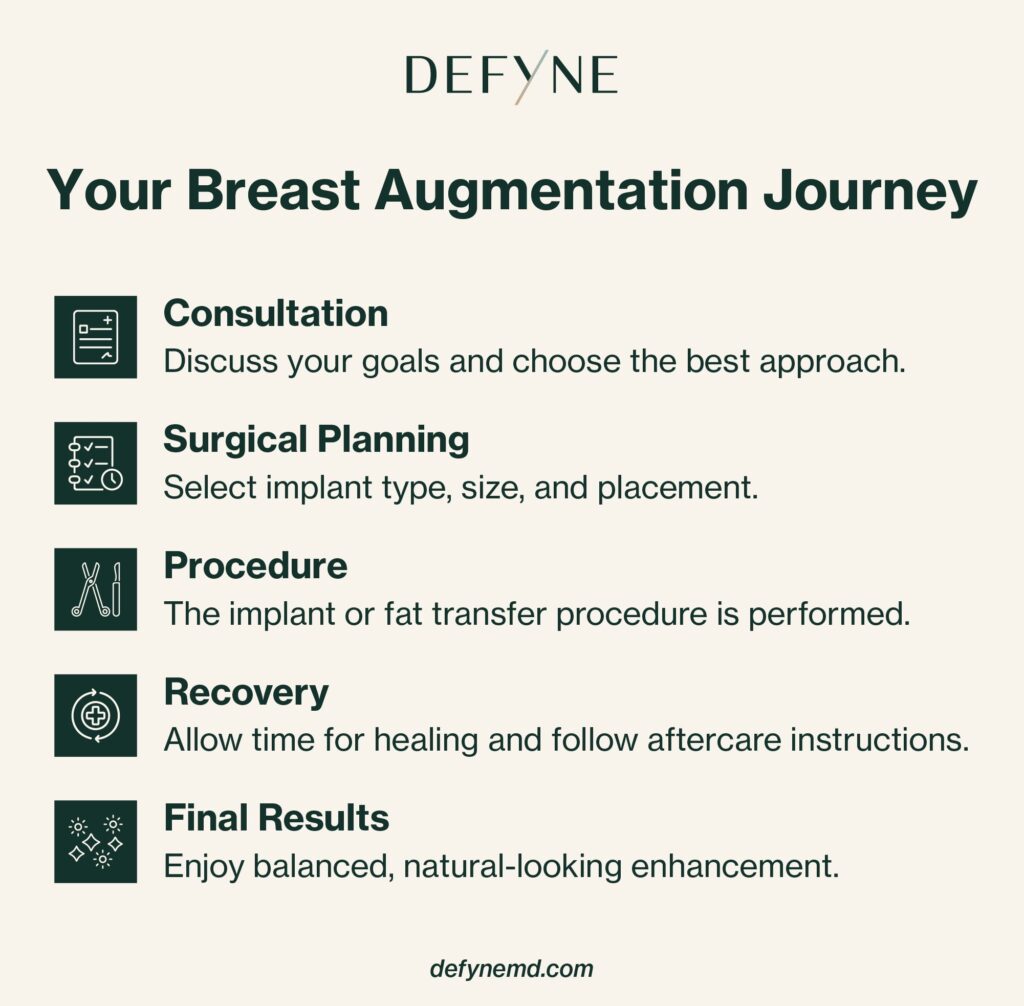
The very first step of any breast augmentation is a consultation with an experienced, board-certified plastic surgeon. Careful evaluation of your medical history, goals, and overall health will help your surgeon plan personalized care.
During breast augmentation, an incision is created, and the implant is placed. There are several ways that your surgeon can choose to approach implant placement:
- Submuscular—under the pectoral muscle, which can provide more soft-tissue coverage for the implant and may be recommended depending on your anatomy, implant type, and goals
- Subglandular—behind the breast tissue and above the muscle, which may be appropriate for patients with enough natural tissue coverage and specific aesthetic goals
- Subfascial—above the pectoral muscle but beneath the thin fascia that covers it, an approach that avoids disrupting the muscle while still adding a layer of tissue over the implant, and may reduce animation distortion (movement of the implant when the muscle flexes) for appropriately selected patients
Incision Types:
- Inframammary (most common)—an incision placed in the natural fold beneath the breast, commonly used because it gives direct access for precise implant placement and can help hide the scar in the breast crease
- Periareolar—an incision made along the edge of the areola, where the transition in skin color may help camouflage the scar for some patients
- Transaxillary—an incision placed in the armpit, allowing the implant to be inserted without a scar on the breast itself, though it may not be ideal for every implant type or surgical plan
Recovery Time, Downtime, Scarring, and What Patients Can Expect
Most patients go home the same day after breast augmentation and leave surgery wearing a support bra, dressing, or bandage to help minimize swelling and support the breasts as they heal.
Typically, initial downtime is 1-2 weeks, while strenuous exercise, heavy lifting, and chest-focused workouts often require 4–6 weeks. Full settling of the implants and resolution of swelling can take several months, so the final shape may continue to refine over time.
Recovery does vary based on implant placement (submuscular, subglandular, subfascial), incision type, and individual healing
While smaller implants may align with a more minimal, natural aesthetic, every breast augmentation still requires careful scar care, temporary activity restrictions, and a gradual return to exercise only after your surgeon clears you.
Ideal Candidates for Ballerina Breast Augmentation
Ideal candidates for ballerina breast augmentation are patients who want a subtle, smaller, natural breast enhancement rather than a dramatic size increase.
This may include patients with naturally small breasts, mild asymmetry, volume loss after pregnancy or weight changes, or an athletic frame who want more balance and proportion without a result that looks overdone.
Candidates should also be in good general health, have fully developed breasts, and maintain realistic expectations about what breast implants can and cannot achieve.
Because breast implants are not lifetime devices and may require monitoring or future care, a consultation is essential to determine whether small breast augmentation, fat transfer, a breast lift, or another approach is the safest and most appropriate option.
The Defyne Approach: Innovative Implant Technologies and Minimally Invasive Techniques
At Defyne Plastic Surgery, we offer both traditional surgical breast augmentation and minimally invasive options, giving you the flexibility of an approach that best fits your aesthetic goals, comfort level, and lifestyle.
One option for achieving a subtle to moderate increase in breast size is Defyne’s signature True Shape Breast Augmentation.
This innovative scarless procedure improves breast shape and volume with Enhanced Viability Fat Transfer (EVFT) and advanced sculpting methods, helping create personalized, natural-looking enhancement without implants or general anesthesia.
We also provide traditional breast augmentation and can help determine which approach and type of breast implant is appropriate for you. Both types of breast augmentation can also be combined with other aesthetic procedures, such as a mommy makeover, breast lift, or liposuction for flawless results.
If you are considering a small breast augmentation or want to know whether ballerina implants are right for you, contact Defyne to schedule your consultation.
Contact Us
Request a Consultation
Are you ready to take the first step toward defining your destiny and achieving your best look yet? At Defyne, our board-certified plastic surgeons are skilled in performing both surgical and non-surgical procedures, achieving individualized, natural-looking results. Contact Defyne today to schedule your consultation appointment.