





How to Prevent Ozempic Face—Managing Facial Volume Loss Due to GLP-1 Weight Loss

While weight loss with GLP-1s can be successful even in the first few months of treatment, it can come with an unexpected side effect: facial volume loss, sometimes dubbed “Ozempic face.” As weight is rapidly lost, some of it is lost from the face, resulting in what can feel like a sudden, unwanted transformation in the mirror: a gaunt, aged appearance.
If you’re wondering how to fix Ozempic face, there are practical aesthetic solutions that can restore facial volume and correct sagging skin.
At Defyne, our board-certified plastic surgeons can even recommend proactive aesthetic care and measures, such as fat banking, that offer options for a youthful face after facial fat loss. You can take the first step in facial volume restoration today by scheduling a consultation.
Understanding “Ozempic Face”
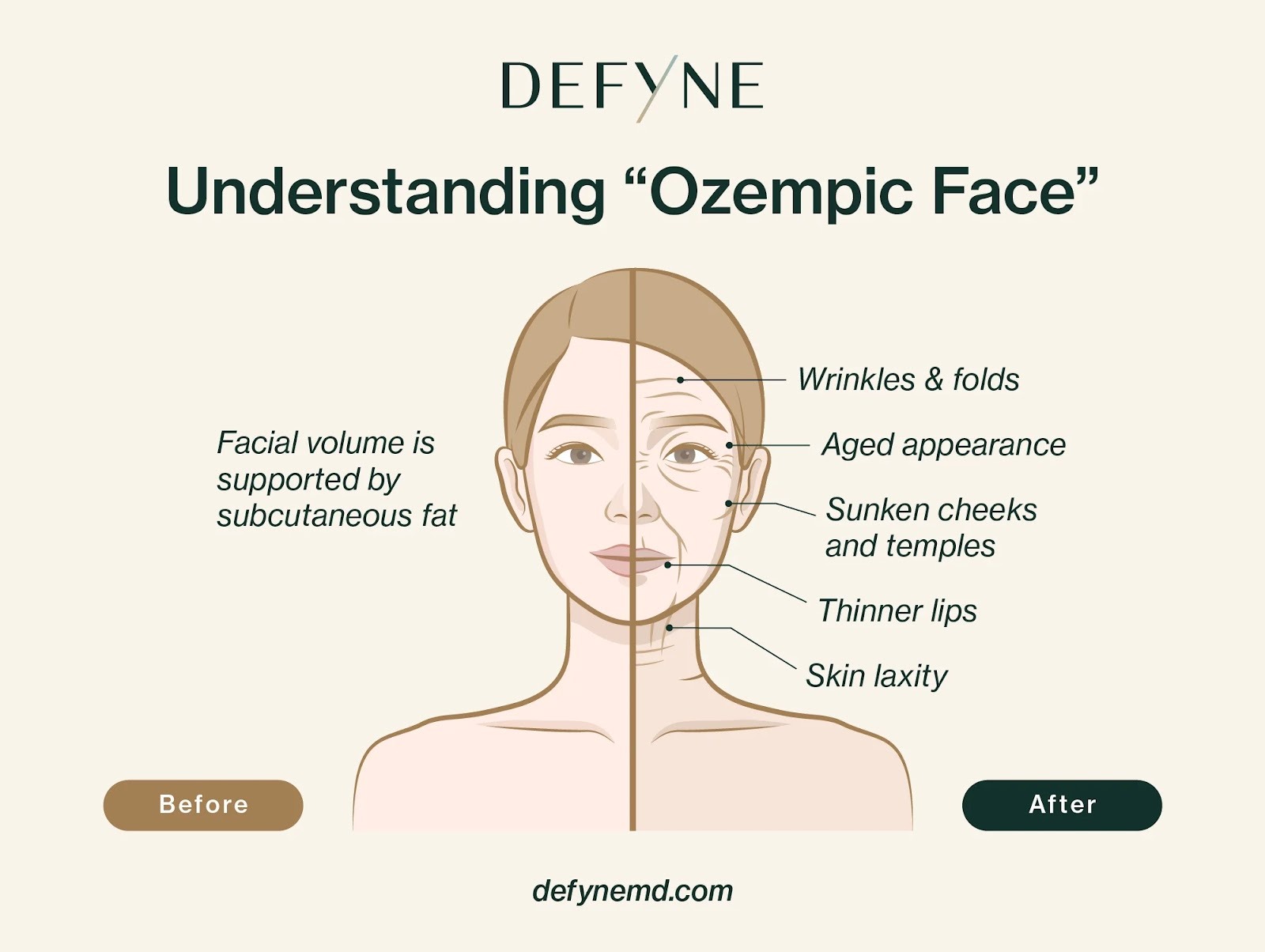
Body fat correlates with facial volume—meaning that as body fat is lost, subcutaneous facial fat also decreases. Along with this, collagen and elastin are also lost, contributing to new wrinkles, loose skin, and an overall older appearance. This can be true even at younger ages, making someone appear older than they are.
With as much as 13% of the population having used GLP-1s, associated facial volume loss or “Ozempic face” is a rising concern.
While it is important to note that any rapid weight loss can produce similar results, the use of GLP-1 medications can create a catch-22. Although they offer health benefits such as improved diabetes management, effective weight management, and reduced obesity-related risks, the psychological effects of a dramatically aged appearance can affect mental well-being for many individuals.
How to Prevent Ozempic Face
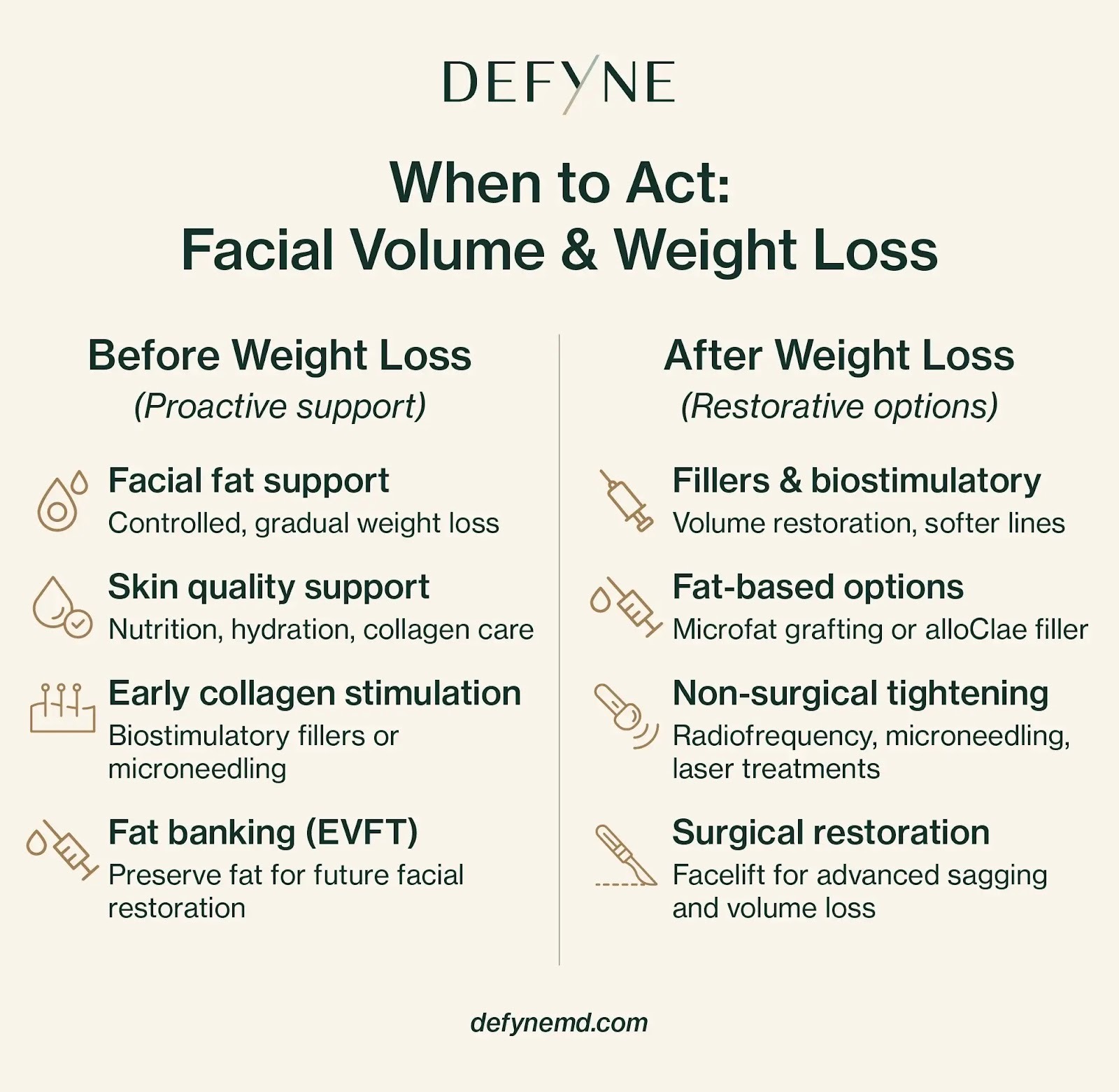
Before losing weight with GLP-1s even begins, there are practical steps you can take to help prevent Ozempic face.
Lose Weight Slowly
Working with your healthcare team to carefully moderate the rate of weight loss can help your skin adjust to fat loss. Aim for a consistent, slow reduction.
Maintain Optimal Nutrition and Skin Health
You can support collagen production and overall skin health inside and out by eating a balanced diet high in zinc, vitamin C, and proteins that encourage healthy collagen and improved skin elasticity. Staying hydrated is also important.
Proper skin care with moisturizers and products containing retinoids, peptides, hyaluronic acid, and vitamin C is proven to support collagen and offers additional benefits.
Use Sunscreen
Sun damage further destroys collagen and elastin, impairs healthy skin, contributes to fine lines and wrinkles, and causes uneven skin tone. Use skin care products containing SPF, even on cloudy days.
Consider Early Intervention Strategies
You may wish to consult a plastic surgeon to discuss collagen-stimulating treatments, such as dermal or biostimulatory fillers, during weight loss to help preserve facial structure.
Microneedling can also serve as a supportive treatment, either on its own or alongside fillers, to help maintain skin quality. Finally, fat banking prior to weight loss may be ideal for future volume restoration.
Fat Banking: A Proactive Solution for Future Volume Restoration
Fat banking is a process through which a patient’s own fat is harvested—typically through a gentle liposuction process—before significant weight loss occurs.
The collected fat is processed and cryopreserved (frozen and stored) for future use.
This stored fat can later be used for autologous fat grafting, a technique where your own fat is injected into areas of your face to restore lost volume.
The main advantages of fat banking and fat transfer are that they provide a natural, biocompatible, and long-lasting option for facial rejuvenation, restoring lost volume while avoiding the need for synthetic fillers.
However, outcomes can vary depending on fat graft survival, and the process requires specialized facilities and expertise.
At Defyne, we’re innovating fat grafting techniques with Enhanced Viability Fat Transfer (EVFT), surpassing standard approaches with fat retention rates above 80%.
Options for Facial Volume Restoration After Weight Loss
If volume restoration is needed following GLP-1 weight loss, there are several options available.
Dermal Fillers and Biostimulatory Fillers
Dermal and/or biostimulatory fillers, which include fat grafting, offer an effective approach for individuals seeking to restore volume, diminish lines and wrinkles, refine features such as the lips, and achieve a more youthful, contoured look.
Defyne offers multiple options:
- Microfat grafting
- alloClae, an innovative, minimally invasive dermal filler made from human-derived donor fat cells and extracellular matrix proteins
- Juvéderm, formulated with hyaluronic acid (HA)
- Restylane, also HA-based and specially formulated based on treatment goals
- The Reliance line of Resilient Hyaluronic Acid (RHA) fillers, created to correct moderate to severe folds and dynamic wrinkles
- Sculptra, created with poly-L-lactic acid (PLLA), a substance that stimulates collagen production
Non-Surgical Skin Tightening Procedures
Minimally invasive, non-surgical options that tighten skin can be used alone or in combination with dermal fillers to help contour and smooth the face, reducing the effects of Ozempic face, including sagging skin:
- Radiofrequency treatment leverages thermal energy to stimulate collagen and elastin production for improved skin elasticity.
- Microneedling, a procedure that uses fine needles to create tiny punctures in the skin, stimulating the body’s natural healing response and boosting collagen and elastin production for smoother, firmer skin.
- ReGen Needling is a proprietary Defyne microneedling treatment approach that involves combining microneedling with nanofat, PRP, or exosomes to boost regeneration.
- Derma-coring, a procedure in which tiny tissue cores are removed from the skin, triggers the production of collagen and elastin, resulting in firmer, smoother, and more evenly textured skin with much-improved skin quality.
- Laser treatments use controlled thermal energy to tighten the skin and stimulate collagen and elastin production.
Surgical Treatment Options
In cases of extreme weight loss, excessive skin sagging and volume loss may benefit most from a surgical approach to restoration.
A facelift restores a youthful appearance by addressing common signs of the natural aging process, such as sagging cheeks and jowls, pronounced nasolabial folds (often referred to as “smile lines”), and loose skin that diminishes facial definition.
Ready to Improve Ozempic Face?
Although Ozempic face may be a common side effect of rapid weight loss, it can be prevented with proper support and treated if it develops. It can be reassuring to discuss your options with a board-certified plastic surgeon before and during your weight-loss journey to determine whether fat banking and/or modern facial rejuvenation techniques are the right choice for you to restore volume. Defyne is pleased to offer a personalized approach backed by industry-leading technology to help you maintain a youthful, confident appearance. Start preventing Ozempic face today by scheduling your consultation.
Contact Us
Request a Consultation
Are you ready to take the first step toward defining your destiny and achieving your best look yet? At Defyne, our board-certified plastic surgeons are skilled in performing both surgical and non-surgical procedures, achieving individualized, natural-looking results. Contact Defyne today to schedule your consultation appointment.